I contracted meningococcal septicaemia, which resulted in a hypoxic brain injury and required a three-month stay in the ICU at the Princess Royal, a fantastic hospital.
Following a successful period in a RHN rehabilitation hospital, I was able to return home—initially to Bromley, and later in 2016, to Wood Green, Haringey.
Because of my physical disability, I rely on care four times daily—typically Morning (08:00), Lunchtime (12:30), Tea (17:00), and Bedtime (21:00)—to assist with transfers, hygiene, and daily routines.
This has consistently been managed by a single carer (single-handed) largely thanks to my Sara Plus Hoist.
While I continue to make progress, full recovery is all but impossible. While standing independently is also extremely unlikely, I focus on more achievable goals,
like improving my dexterity.
Core complaint
This complaint has escalated into a bureaucratic mess due to widespread incompetence and lack of accountability across Adult Social Care.
Stripped to its core: Haringey Council failed to maintain safety-critical equipment under statutory LOLER regulations, leaving me with unsupported disability aids.
Their resulting 'solution' left a disabled resident bedbound and advised to wear nappies rather than providing safe, dignified care
Physical Function & Weight-Bearing Status
Although I cannot stand independently, I retain weight-bearing capacity in my legs. (I can put my weight on my legs without pain or discomfort)
The Sara Plus Hoist is an active standing hoist specifically designed to utilize this remaining strength.
Unlike a passive track hoist (which lifts the user completely unsupported), the Sara Plus supports my balance while allowing my legs to bear weight.
This key distinction allows me to maintain daily physical function, supports single-handed care for my four daily visits, and enables dignified personal care during transfers.
Equipment Maintenance & Compliance Breakdown
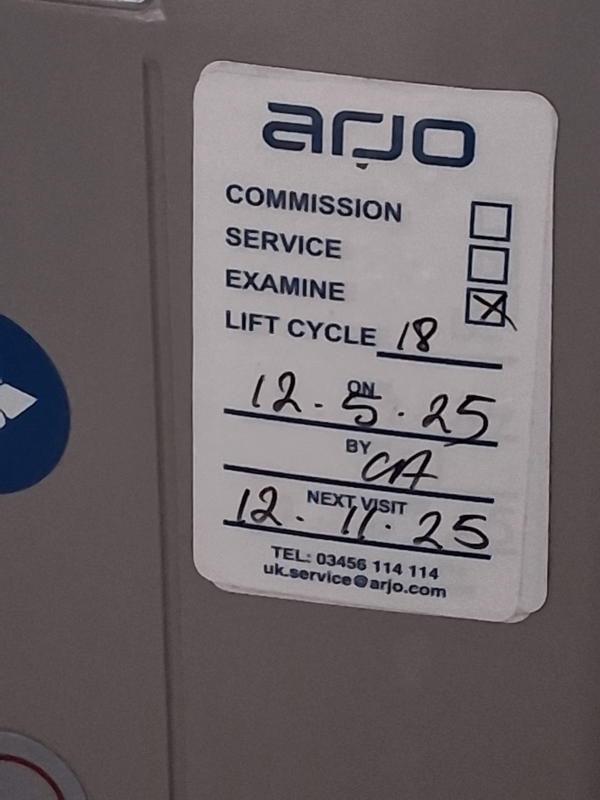
On , the Sara Plus Hoist (a standing hoist where the user actively stands during use) was due for its required six-month service.
This safety inspection did not take place. The equipment had last been serviced on .
Due to the missed inspection, the equipment was left in direct violation of the Lifting Operations and Lifting Equipment Regulations (LOLER).
Consequently, on the care provider sent notification stating they would cease using the hoist due to liability concerns.
On , a meeting was held at my flat with Haringey Council's Social Worker, Occupational Therapist, and Care Coordinator.
I was informed that resolving the standing hoist issues could take weeks. When concerns were raised regarding basic independent functions like toileting while bedbound,
the temporary solution offered lacked consideration for personal dignity.
Following the meeting on , no formal action plan or follow-up communication was provided by the council,
leaving the interim care arrangements unresolved.
Private Resolution: I independently contacted the equipment manufacturer directly and successfully arranged a same-day emergency
service within an hour, taking less than 10 minutes to coordinate.
Comparative Care Analysis: Sara Plus Hoist vs. Track Hoist
Operating a Track Hoist compared to the Sara Plus introduces fundamental changes to daily care operations. Crucially, the Track Hoist requires a minimum of two care professionals to
operate safely, effectively doubling the required care budget. More importantly, it shifts my care model from active rehabilitation to passive lifting, stripping away my daily physical
independence and dignity during personal care routines.
Furthermore, my mother and friends will no longer be able to act as unpaid carers, severely restricting my social interaction and independence outside of formal care hours.
This submission was the direct result of Haringey Council blocking every practical attempt to find a solution for my Sara Plus Hoist.
Technically, the Council conducts a Financial Care Assessment annually to evaluate my financial position and set my care contributions.
However, a Care Needs Assessment—which focuses on the actual provision and safety of my care—has been neglected. Despite having complex, single-handed care four times a day,
my care needs have not been formally reassessed since my relocation to Haringey around September 2016. A fresh assessment under the Care Act 2014 is a statutory necessity,
not an optional request.
A critical element of the submission was the explicit request for an Advocate.
Statutory Exception: While standard ASC
complaints within Haringey do not automatically trigger independent advocacy,
formal Care Act Assessments carry a clear statutory exception where a service user experiences substantial difficulty in engaging with the process.
As of June 2026, this legal request has been completely ignored by the local authority, leaving me to navigate complex administrative failures
without the independent representation mandated by law.
Timeline
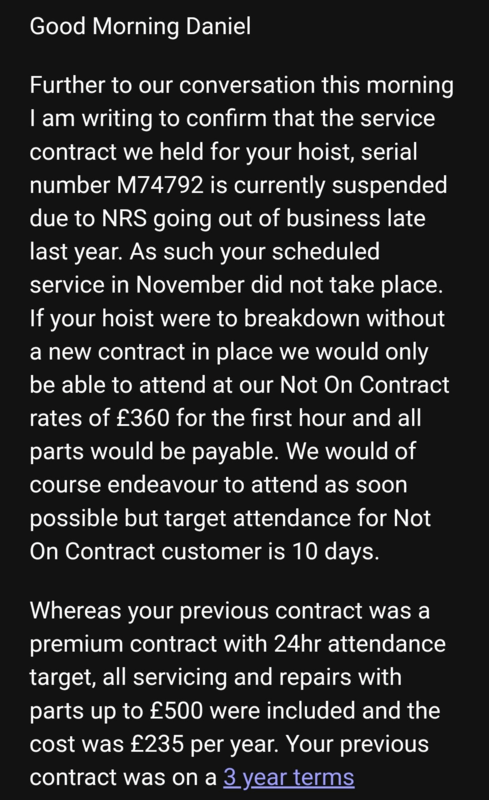
DW [Hoist Manufacturer] told me more in one email than Haringey Council had done since August 2025.
This was the first indication that the missed service was a major issue.
I forwarded the email from DW [Hoist Manufacturer] of 2 February 2026 to Adam Starr.
I requested the council to appoint a Social Worker to refer me to POhWER for a Care Act advocate, as self-referral is not permitted.
Additionally, a fresh care assessment is required to address essential equipment needs, specifically a Track Hoist and a compatible commode, noting that the
transition to a track hoist necessitates an increase in both carer allocation and visit duration.
Submitted a formal Subject Access Request (SAR) to obtain copies of the missing referral documentation.
— Introduction to LOLER
Spoke with and received follow-up correspondence from KS [Hoist Manufacturer], where I was advised on the Lifting Operations and Lifting Equipment Regulations (LOLER).
This would appear to be the partial response to my request.
During the conversation with Michelle Clarke [Interim Service Manager], we agreed that a formal care assessment would take place within seven days (by ).
Proposals to adjust care schedules or staffing levels prior to this assessment were set aside, as any changes must be evidence-based and informed by a comprehensive review of my needs.
— Care Warning
FA [Care Provider] warned Michelle Clarke & Adults Central (adultscentral@haringey.gov.uk) about the Hoist.
— Care Warning
No substantive progress has occurred. It was agreed with the care provider that they could no longer use the Sara Plus Hoist.
— First Care Assessment
Home Visit conducted.
Sent a follow-up email chasing an update from Adam Starr and Michelle Clarke.
Sent a chaser email to Jay Khan, Jo Baty, Amanda Edwards, Lucia Nelson, Adam Starr, Michelle Clarke, Andy Donald,
Pauline McMorrow.
The sole response was from Cllr Lucia das Neves, who noted that this issue sits outside her cabinet portfolio (Health, Social Care and Wellbeing), though she remains my local ward councillor.
—
UPDATE: Cllr
Lucia das Neves
has been appointed Chair of the Overview and Scrutiny Committee.
Despite assuming this crucial oversight role—which exists specifically to hold the Council's operations to account—she has taken no action to investigate or intervene.
By continuing to ignore Haringey Council’s repeated breaches of statutory timescales, LOLER safety regulations, and internal complaint procedures, she is failing to exercise the
fundamental mandate of her own committee.
Received a telephone call from Jay Khan.
The formal email from Cllr Lucia das Neves quoting the official position of Adult Social Care was sent on 26 May 2026 at 14:15
(the actual text quoted from Adult Social Care was completely unsigned and anonymous).
The included snippet summarises one of the most ridiculous parts of the entire case: blatant doublespeak. The Council claims the request has already been fulfilled, while simultaneously arguing the request is invalid and outside their remit anyway.
This particular instance highlights a larger problem in that the unidentified person who represented Adult Social Care was misrepresenting a critical element of
the case to the elected ward councillor. Crucially, Cllr das Neves never challenged this response. She never invited my comments or sought my opinion, resulting in a third-party perspective that showed extreme bias towards Haringey Council.
Issued a formal request for an in-person update by 17:00 that day.
— Unsolicited
Received unsolicited contact from Tracy Park offering to coordinate communication and provide weekly updates regarding Adult Social Care.
This intervention was initiated without my involvement—marking the third representative assigned to mediate these issues.
Since the email correspondence from Tracy Park, there has been no substantive change or
resolution to the issues raised.
The weekly progress updates promised by
Tracy Park have not been issued for seven consecutive intervals
(as of mid-July 2026), constituting a material, ongoing failure to adhere to the self-imposed (by Haringey Council) communication strategy.
— Clarity
FA [Care Provider] confirmed the increased time for each care visit had no substantive change to my care, and most importantly would not allow the Track Hoist to be used.
— Accountability
I note your comments regarding a home visit. Whilst I understand your reasons for requesting this, any assessment of
your equipment, care and support needs, or housing-related adaptations would need to be undertaken by the
appropriate professional teams. I will, however, ensure that your request and comments are shared with the relevant service managers for consideration.
— Tracy Park
My constant request for a home visit is for accountability, not assessment. Furthermore, Tracy Park treating this as a pending request for consideration directly
contradicts Adult Social Care's claim to Cllr das Neves three days earlier (26 May) that the visit had "already taken place"—proving the council knowingly misled my ward councillor
to shut down inquiry.
— Performative Empathy
I appreciate that this is a very frustrating and difficult time for you, but I will endeavour to provide an accurate picture of where we are,
what we need to do and what the next steps are.
— Tracy Park
— ICO Escalation
The statutory response period for the 27 April SAR expired without action.
The matter has been formally referred to the Information Commissioner's Office (ICO).
— Provider Clarification
Foos Care clarified details regarding the revised care package (single-carer, 1 hour, 4x daily).
They explicitly confirmed that operating a track hoist safely requires a two-person ("double-handed") team and noted that the Council had only updated care hours without
transmitting necessary details regarding equipment requirements.
While the Council formally increased my total daily care allocation from 150 minutes to 240 minutes, this administrative adjustment has absolutely no substantive effect on how my care is
delivered. Without resolving the underlying equipment crisis or authorizing the two-person team required for a track hoist,
simply adding more minutes on paper does not address the fundamental safety and operational failures.
Formally served a Letter Before Claim on Haringey Council, establishing a compliance deadline of .
Haringey Council requested an extension on the Letter Before Claim to .
Response: This request was formally rejected with full justification. The Council provided no counter-proposals or further response following the rejection.
The original legal deadline for the Letter Before Claim expired with no response or acknowledgement from the Council.
Second Letter Before Claim Haringey Council- Letter before Claim - Followup.pdf
Consulted with a trusted medical professional regarding the ongoing Sara Plus Hoist issues and the associated risks.
The Council's self-proposed extension deadline of expired without a substantive response.
A follow-up email triggered an automated out-of-office reply from the lead caseworker ("On leave, returning 13.07.26"), confirming the
department failed to make operational provisions to manage their own proposed deadline.
Escalated and formally referred the matter to the Health and Safety Executive (HSE).
Third Letter Before Claim Haringey Council- Letter before Claim - Claim.pdf
Received invoice for Hoist Service and Repairs.
Haringey Council’s delayed response was received completely unannounced. Although the previous request for a 9-day extension had been formally rejected, no response was provided by
either the original deadline or the Council's self-proposed extension date.
The response arrived:
36 days after my original pre-action deadline of
27 days after the Council's own self-proposed extension deadline of
Payment of invoice has been acknowledged.
Haringey Council submitted the first of several fundamentally flawed assessments titled Your Support Plan.
I have an extensive list of concerns with this document, both practical in terms of the actual content and presentation.
Firstly, the care assessment was conducted on 8 May 2026. The document is dated 14 May 2026. It wasn't until 5 August 2026 that I even knew the document existed or had the opportunity to comment on it.
Secondly, the document contains a fundamentally flawed description of my transfers. This flawed understanding is used to justify the care hours increase.
In the official statutory document, under the "Addendum" section, it has recorded my contact with the complaints team and included the
highly dismissive and defensive statement:
Mr Mcmorrow is know [sic] to regularly lodge a complaints as and when if any issues arises...
— Haringey Council
RB [Advocate] reported that Tracy Park had removed me from the email chain on Friday.
Replying directly to Tracy Park and Doris Owusu, RB [Advocate] explicitly called out my exclusion from my own care correspondence by opening her email with:
Dear Tracy & Doris, Following on from your email below, Mr McMorrow was taken out of the email. I assume it was also your intention to take myself out of the email also?
— RB [Advocate]
This was in response to Tracy Park's email sent on Wednesday, 5 August 2026 at 17:27, where Tracy had dropped me from the CC line while instructing Doris to withhold my
Care Act re-assessment review until RB [Advocate] and I could "manage expectations" and prove a "material change in needs".
This claim was never addressed or acknowledged by Tracy Park or Doris Owusu.
In hindsight, the original Care Assessment proved Severe Procedural Failures. It demonstrated a fundamental lack of understanding, process and accountability.
Taking this version into court would have been impossible to refute.
@haringeyGreen posted a
video about Anne Gray
talking about her role (Chair) on the Adults & Health Scrutiny Panel.
According to the
Adults & Health Scrutiny Panel Meetings, the panel has not convened since Anne Gray was elected.
Just TWO meetings are scheduled for 2026, & .
— Second Care Assessment
A second care assessment took place to fix the major inaccuracies of the first one (conducted on 8 May 2026), specifically regarding the maintenance of the
Sara Plus standing hoist.
Final Letter Before Claim Pre Action Response Letter Haringey Council v10.pdf.
— Seeking Instructions
I have today returned from leave and am seeking instructions on your letter dated 17.08.26. I will respond further as soon as those instructions are confirmed.
— Natalie Cannon
This blatant excuse and obfuscation tactic completely ignores the fact the submission was also sent to
Litigation&Corporate@haringey.gov.uk and the email exchange with Hamna Habib.
— Regret
Email to Cllr Mark Blake & Tehseen Khan expressing my regret in my Haringey Green vote.
— Accountability
Reported the inaction to complaints.manager@greenparty.org.uk & safeguarding@greenparty.org.uk.
— Progress
No measurable progress has been made with the case. Nothing has been done with regards to Sara Plus Hoist (Scenario A) or Track Hoist (Scenario B).
Given the current LOLER expiration date of 8 November 2026, I am feeling despair and a strong sense of abandonment.
— Procedurally Flawed
On review of your care act file, I have noted that a referral was sent to POhWER from the local authority on 26th June 2026 and a case file was opened on 30th June 2026.
— DF [Advocate] from POhWER
If the referral was only made on 26 June 2026, it means the entire statutory assessment, the drafting of the Support Plan, and the unilateral decision
to modify my care package were conducted completely without the mandatory statutory advocacy support in place.
Legally, this procedural breach cannot be retroactively cured. It renders the entire 8/15 May Support Plan procedurally flawed, invalid, and legally null.
— Last
Email to: Natalie.Cannon@haringey.gov.uk
Email cc: 11 Council Representatives (including Ward Councillors).
Please confirm your availability for this meeting within three working days (by 4:00 PM on Friday, 4 September 2026) [sic]
— Daniel McMorrow
— Read
Natalie Cannon ‘READ’ the email sent 31 August 2026.
I include this only for the timeline. These ‘Read Receipts’ don’t actually confirm the email was understood, just that it was opened.
— Scenario B Expired
Scenario B has some very bizarre constraints. If we accept the three-month lead time from the council's provider for special equipment,
the fact that the commode requires a custom order, and the immovable deadline of the LOLER expiration, then the commode should have already been selected and ordered.
This has not happened.
— Formal Acknowledgment
At 16:33 Natalie Cannon formally acknowledged the email of .
This was just over 7 hours before the formal response deadline expired.
— FAILED
Only Natalie Cannon acknowledged the email of .
The email was sent to Natalie.Cannon@haringey.gov.uk, 11 Council Representatives (including Ward Councillors),
bambos.charalambous.mp@parliament.uk [MP] & RB [Advocate].
See you all In [sic] court. Natalie Cannon [sic] please don’t respond too late. I am going to be spending the weekend as a nervous wreck, I don't need the added stress of a poor response.
— Daniel McMorrow
Ombudsman
Because the council has failed to provide a Stage One response, they are effectively blocking the escalation process.
It is therefore extremely unlikely the Local Government and Social Care Ombudsman (LGSCO) will investigate this aspect, as their mandate typically requires the local authority's internal complaints process to be exhausted first.
Outcome
The second care assessment provided an opportunity to review the practical implementation of Scenarios A and B, though significant timeline concerns remain.
While Scenario A is the preferred approach, its success is heavily dependent on Haringey Council establishing a viable solution before the current LOLER certification
expires on Nov 8, 2026—something the Council has failed to do since February.
Scenario B is the least desirable option as it requires a special equipment order for a suitable commode, which entails a three-month lead time from the council's provider.
To ensure delivery by Nov 7, 2026 and meet the certification cutoff, an order would need to be submitted by September; however, achieving this timeframe I currently view
as unrealistic.
Scenario A: Sara Plus Hoist
This scenario is essentially what I've been doing for about 15 years: to continue using the Sara Plus Hoist.
Negotiate and reactivate the formal service agreement with the original equipment manufacturer (OEM). This ensures priority technical support, certified parts sourcing, and compliance with safety standards.
Establish a formal agreement detailing the anticipated life expectancy of current assets. This document will serve as a strategic roadmap for scheduled decommissioning and capital expenditure (CAPEX) planning for future replacements.
Scenario B: Track Hoist
To swap to using the Track Hoist, the following need to be done/agreed.
Crucial Prerequisite: A commode that integrates seamlessly with my Closomat toilet must be sourced. Without this, the entire track hoist transition is unviable.
My 4 care calls a day would be extended to a minimum of 2 hours to accommodate two-carer coordination, sling positioning,
passive hoisting protocols, and complex commode transfers. The Track Hoist is a completely different type of care.
I've not used any other type of hoist other than my Sara Plus standing hoist in 14 years.
Loss of Physical Leg Function & Weight-Bearing: Switching to a Track Hoist replaces active standing with passive lifting. Removing daily weight-bearing opportunities will lead to progressive muscle atrophy,
reduced joint integrity, and the loss of remaining functional strength in my legs that I have maintained for over 14 years.
 DW [Hoist Manufacturer] told me more in one email than Haringey Council had done since August 2025.This was the first indication that the missed service was a major issue.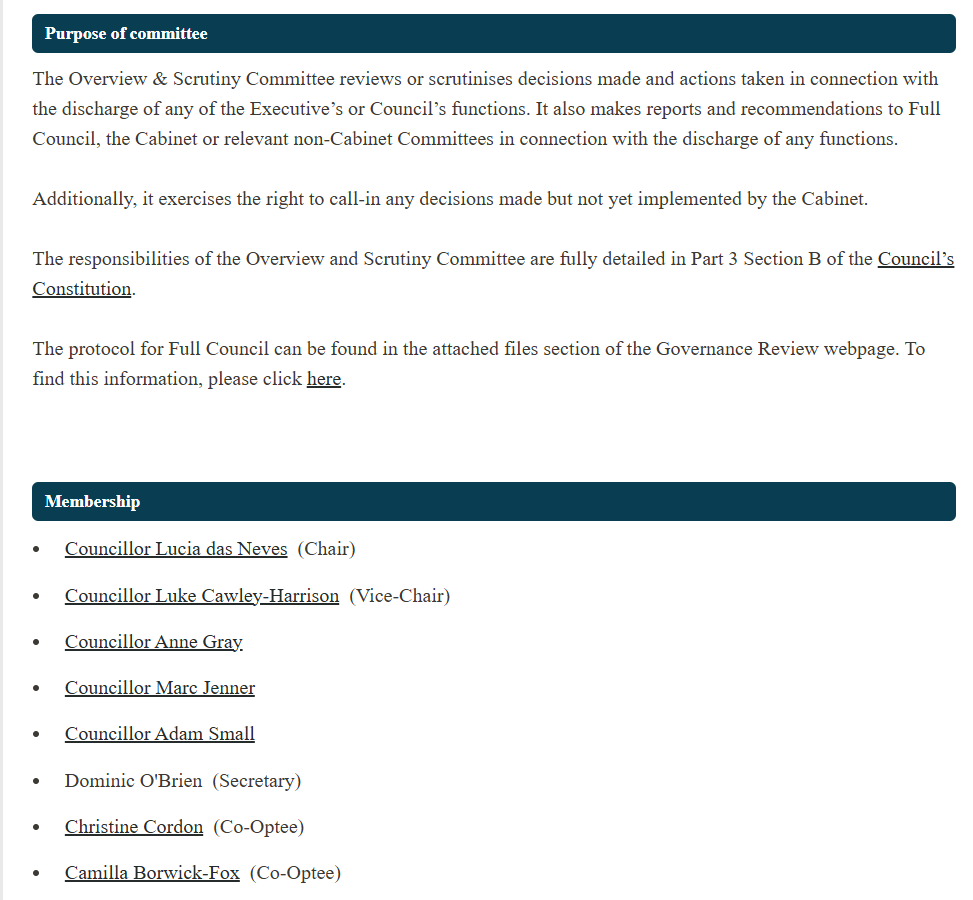
 The formal email from Cllr Lucia das Neves quoting the official position of Adult Social Care was sent on 26 May 2026 at 14:15 (the actual text quoted from Adult Social Care was completely unsigned and anonymous).The included snippet summarises one of the most ridiculous parts of the entire case: blatant doublespeak. The Council claims the request has already been fulfilled, while simultaneously arguing the request is invalid and outside their remit anyway. This particular instance highlights a larger problem in that the unidentified person who represented Adult Social Care was misrepresenting a critical element of the case to the elected ward councillor. Crucially, Cllr das Neves never challenged this response. She never invited my comments or sought my opinion, resulting in a third-party perspective that showed extreme bias towards Haringey Council.